Launch offer — valid today only

📄 Digital book in PDF · read it on your phone or print it

Water Well Driller Exam in Drawings: the Finished Well in 9 Parts, Pump Sizing in 5 Steps One Topic on Every Page

Aquifers, drilling methods, casing and screen, grout and annular seal, setbacks, submersible pumps, pressure tanks, pump sizing and disinfection. Every topic gets its own page: the drawing first, then what you need to remember. 74 illustrated pages.

START STUDYING THIS WAY

🔒 Secure checkout · PDF by email · 30-day guarantee

Every topic, its own pageEvery well part and procedure drawn, with the explanation right beside it
74 illustrated pages9 parts, from groundwater and aquifers to the final exam review
Up-to-date sourcesChecked against ANSI/NGWA-01 and EPA private-well guidance, with state values flagged
PDF by emailFormat

Look Inside the Book

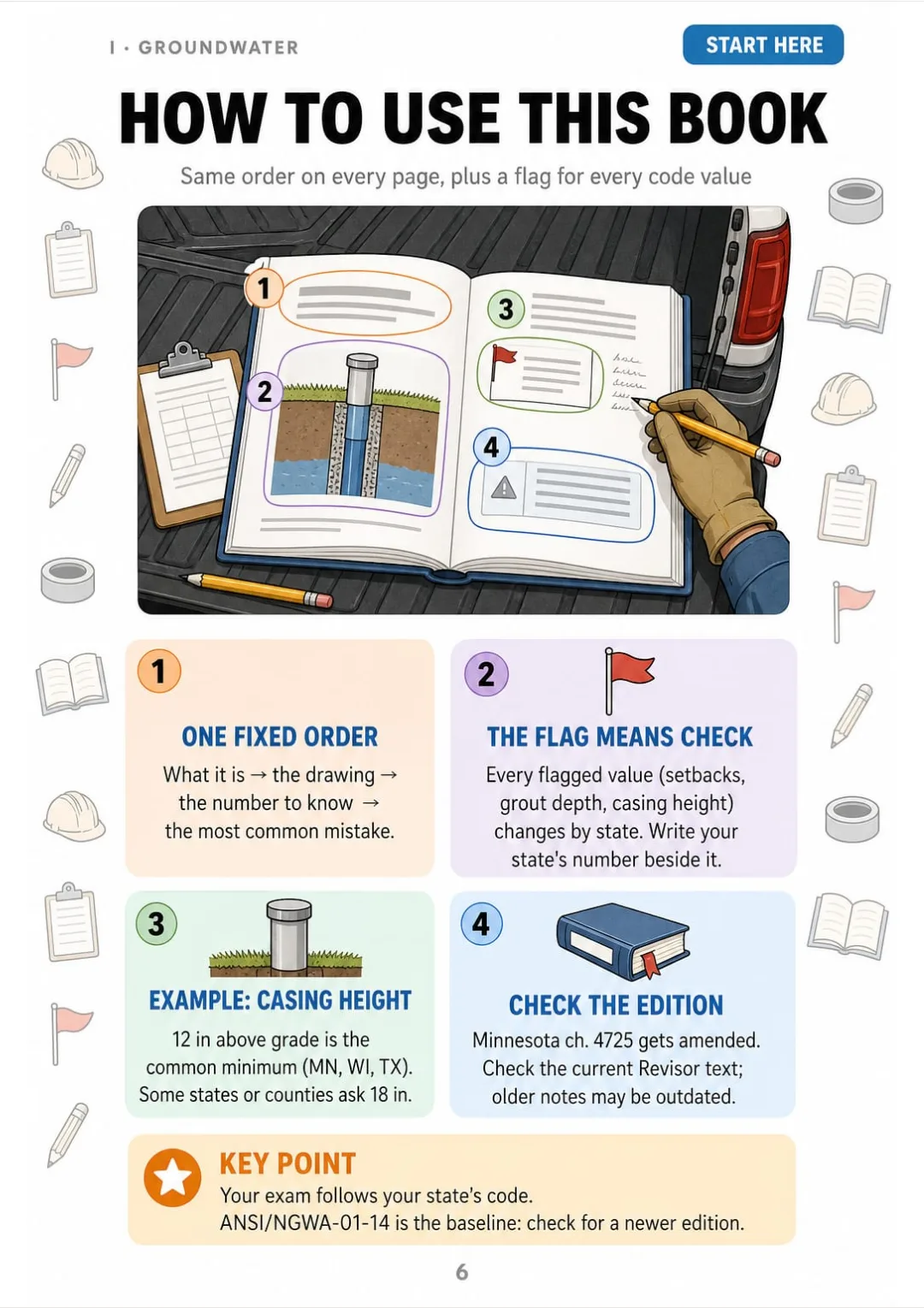
Every page has one big drawing and a box with the numbers and steps you need to know:

Four zones per page and a flag on every value your state sets.
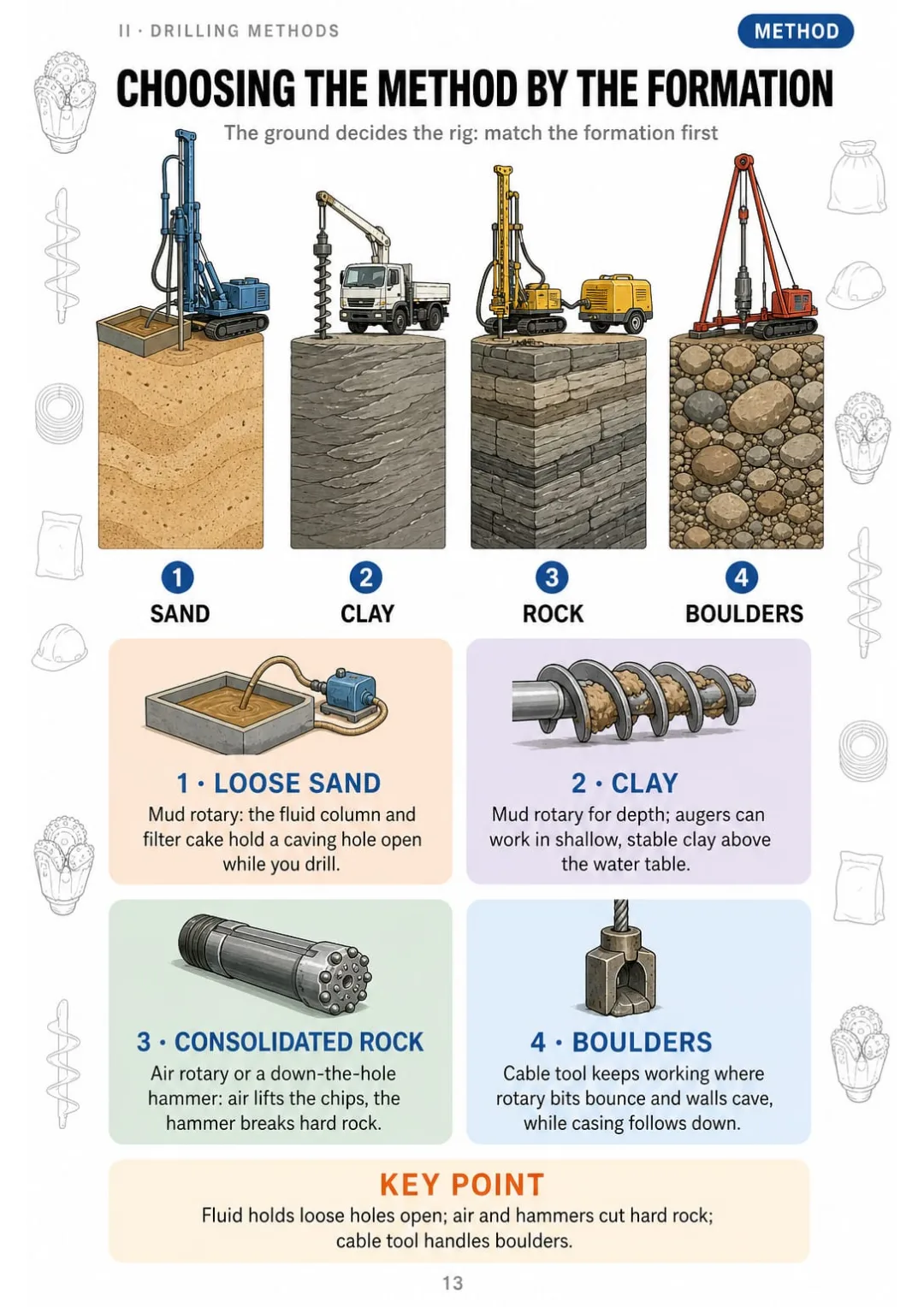
Sand → mud rotary · Clay → mud rotary or auger · Rock → air/DTH · Boulders → cable tool
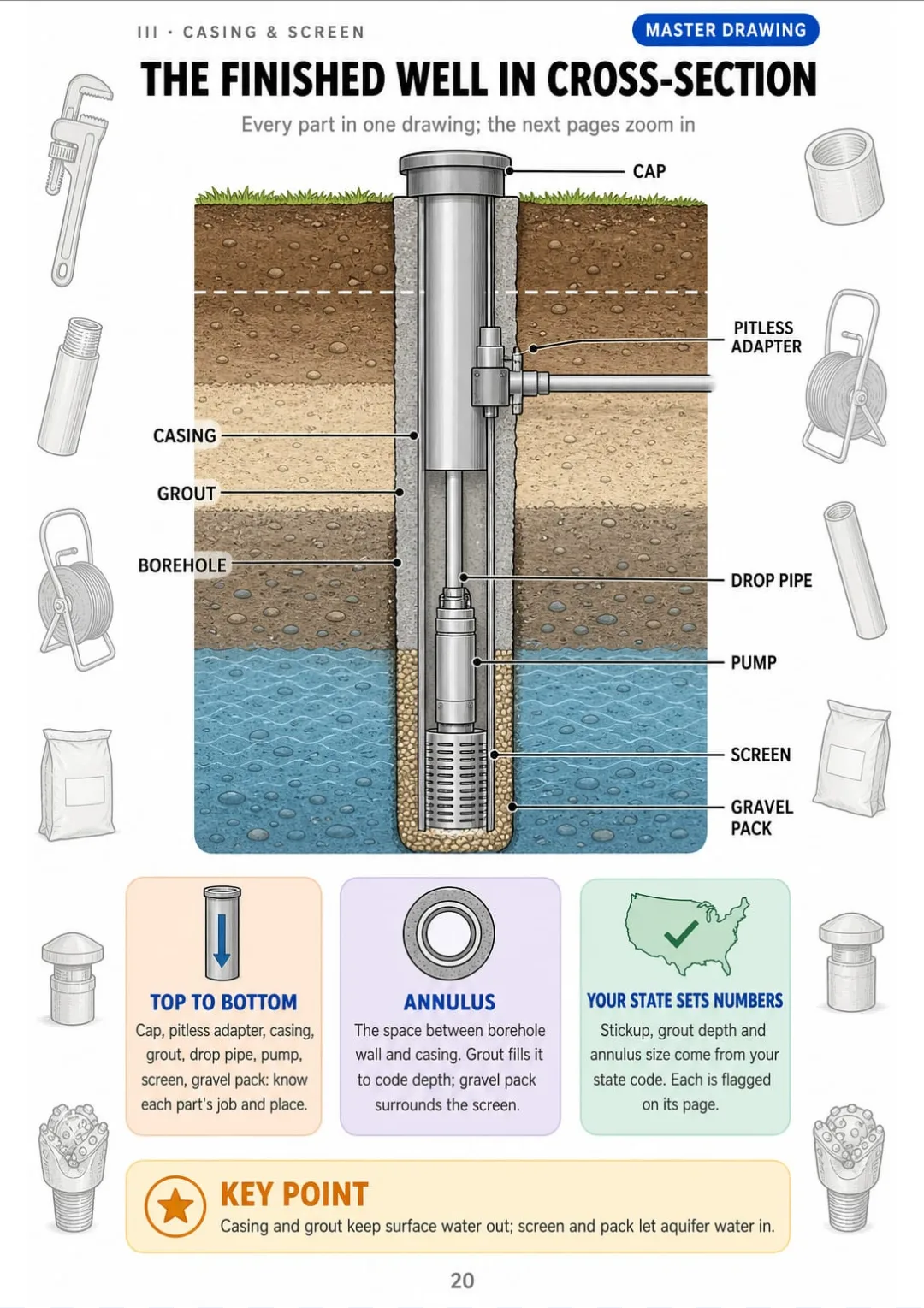
Nine labeled parts, cap to gravel pack, in one cross-section
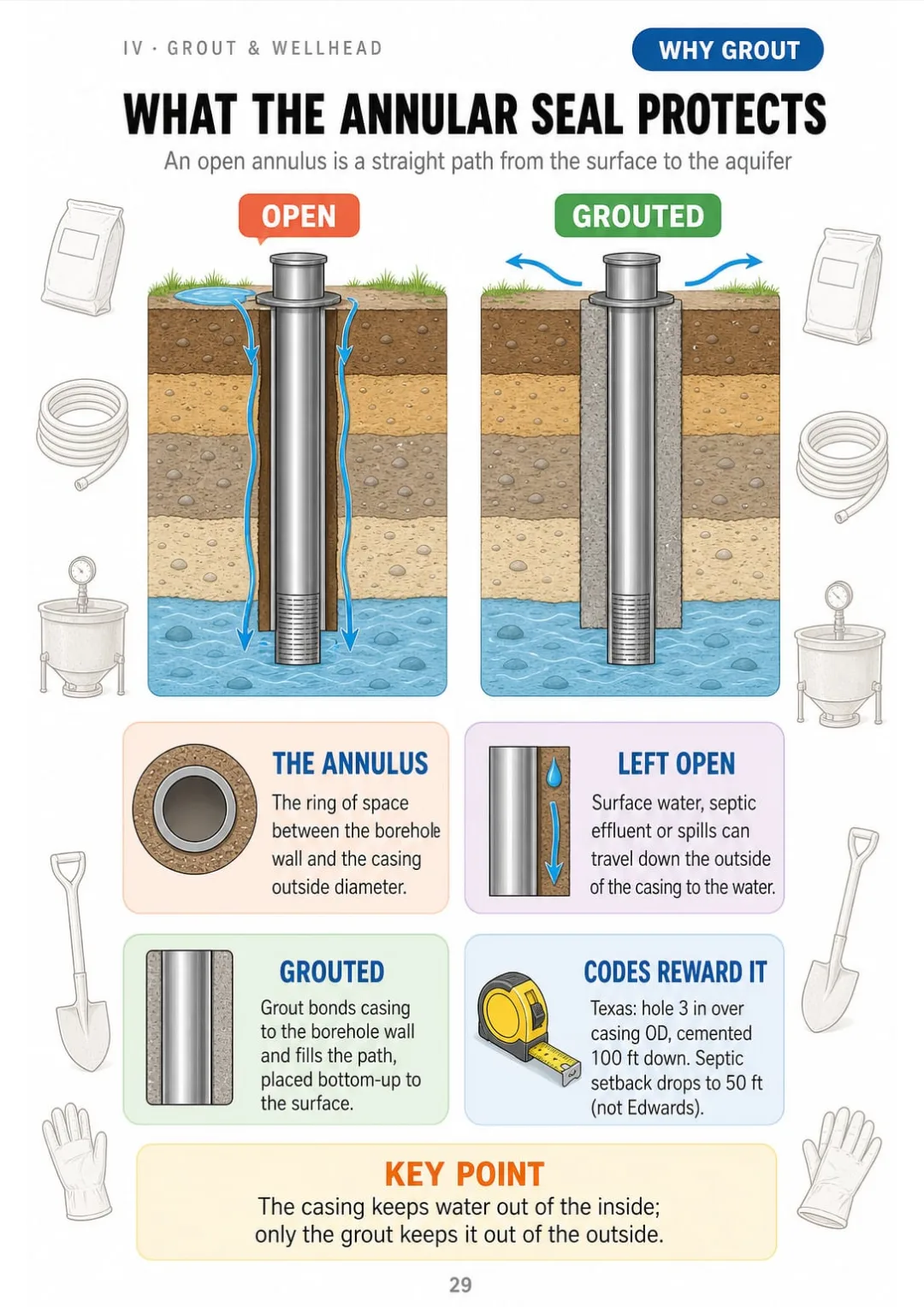
Open vs. grouted annulus: why every well code requires a sealed annular space.
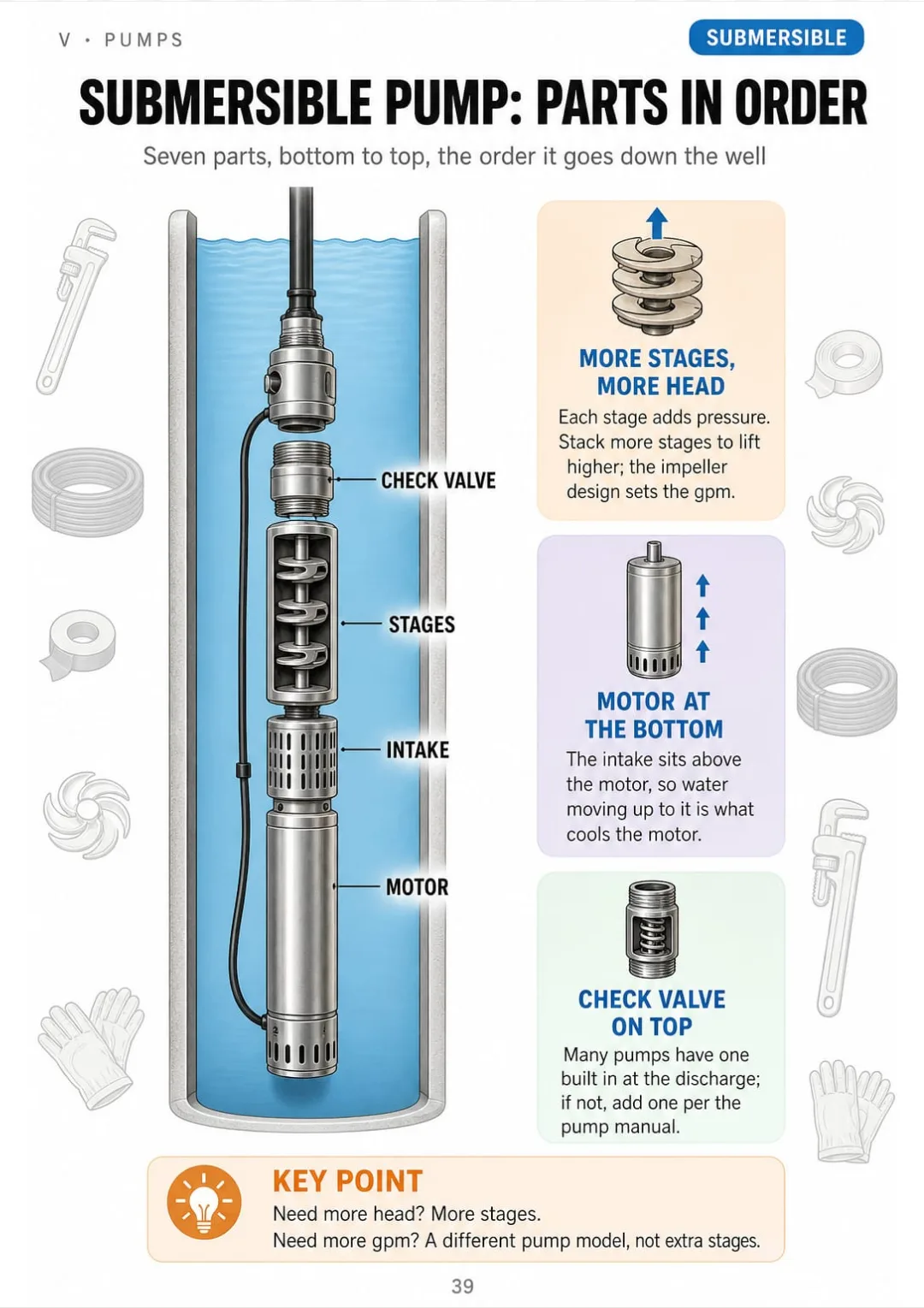
Motor, lead, intake, stages, check valve, discharge head, drop pipe: bottom to top.
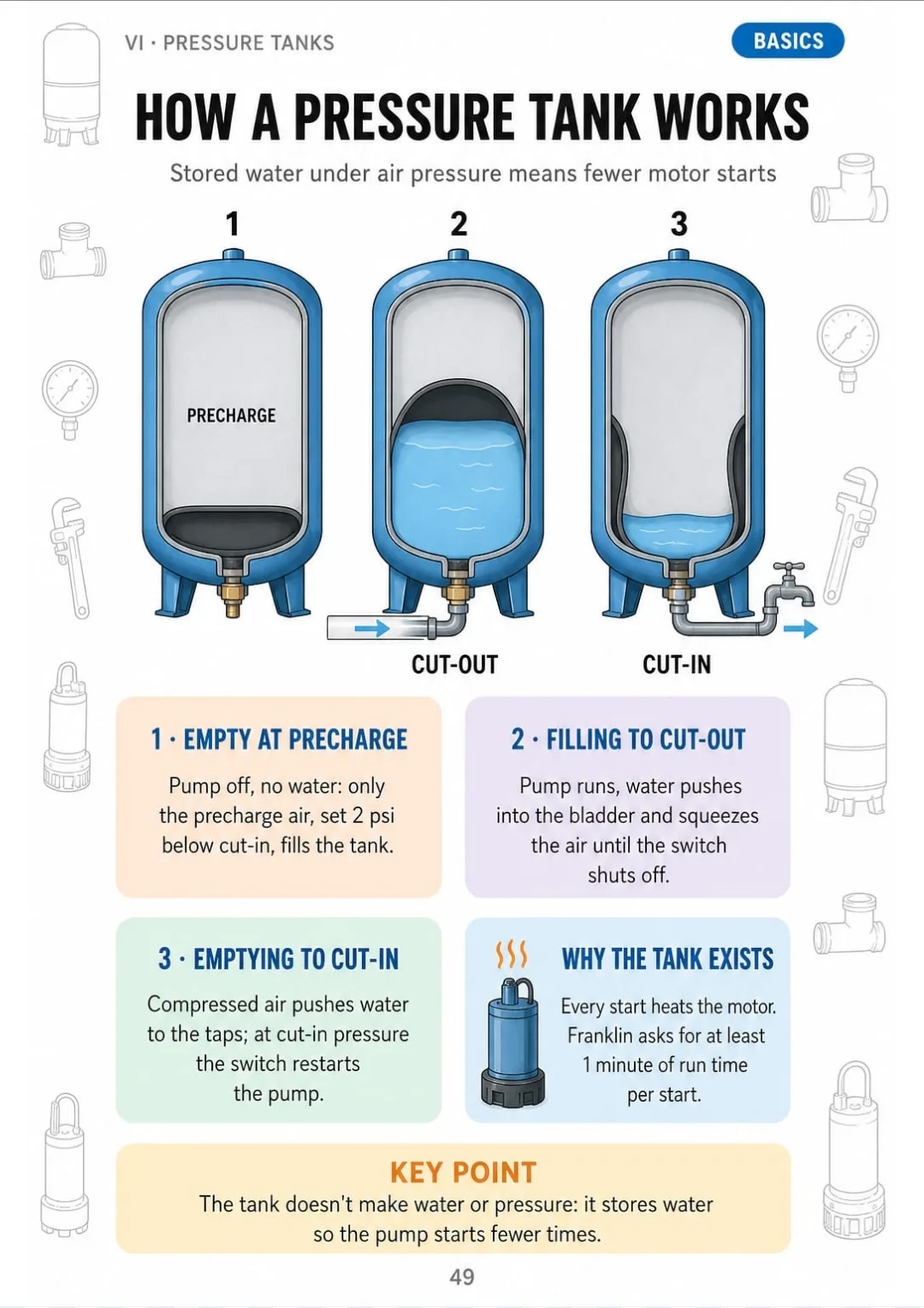
The bladder tank at three moments: precharge, cut-out, cut-in.
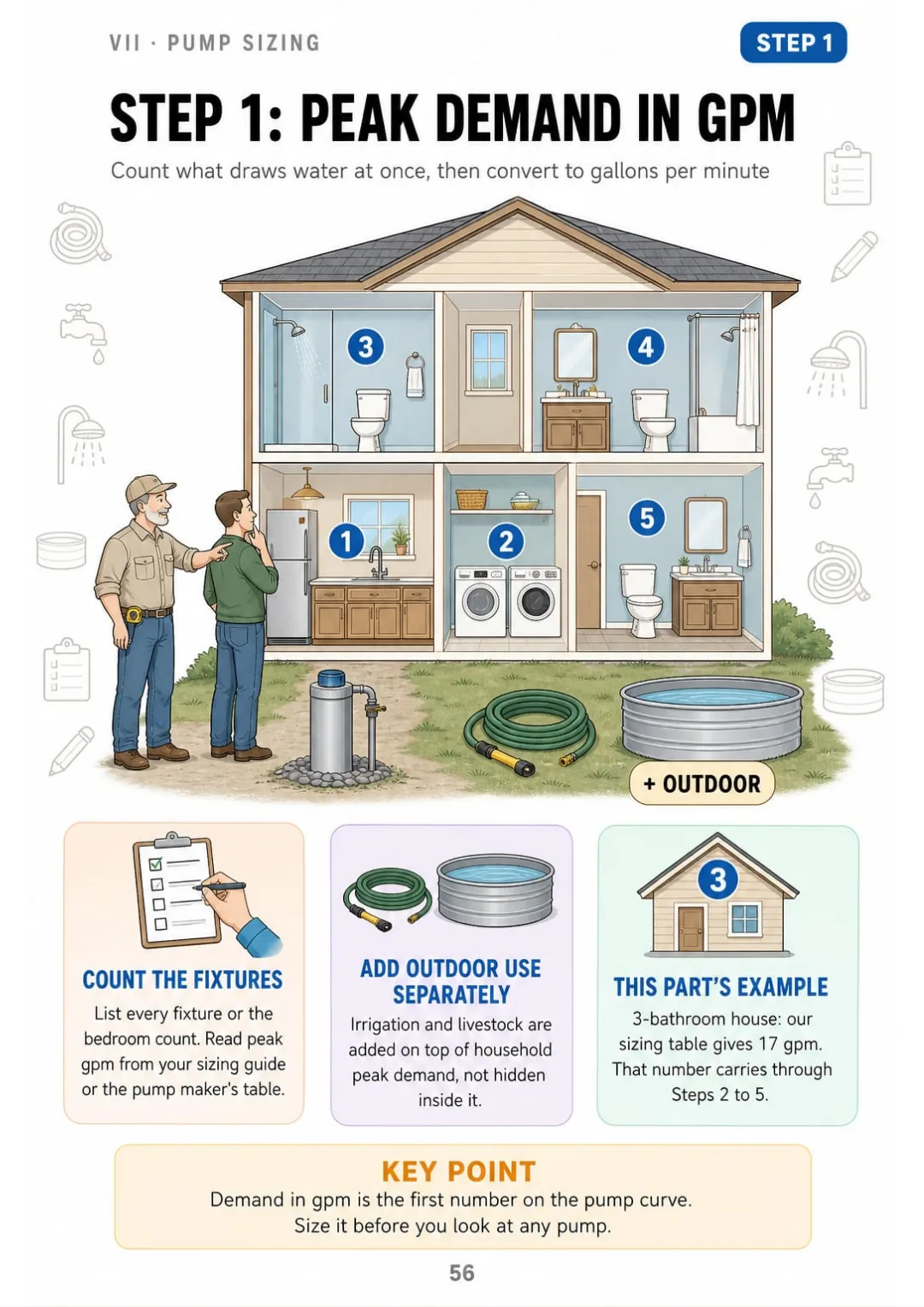
Step 1: fixtures plus irrigation and livestock become one peak demand in gpm (example: 17 gpm).
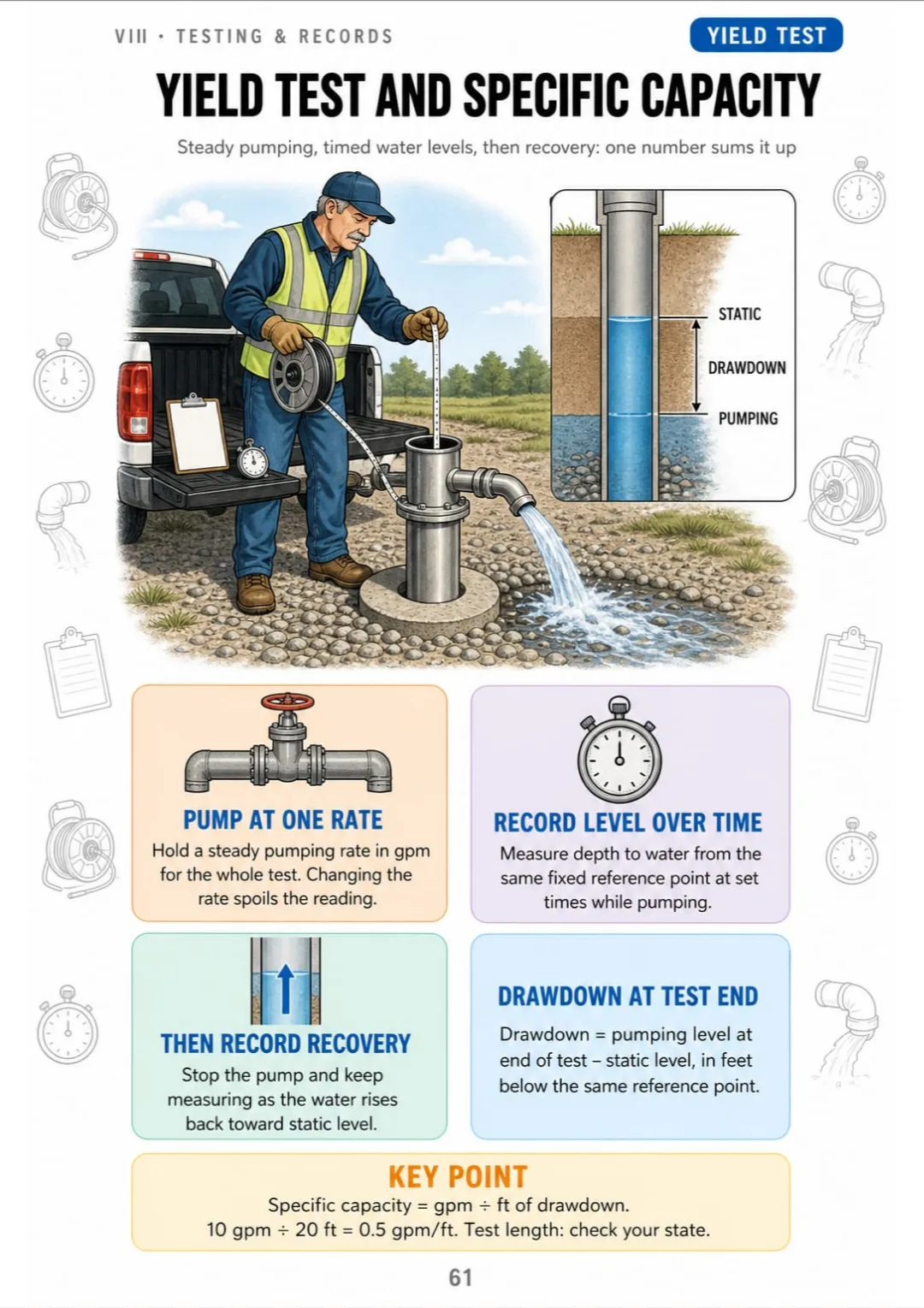
Specific capacity = gpm ÷ drawdown: 10 gpm with 20 ft of drawdown = 0.5 gpm/ft

Swipe to see more →

These are real pages from the book. The table of contents is the full one: 9 parts and 69 topics.

The Problem Isn't You. It's How It Was Explained to You.

You're at the kitchen table with the state code open to the well construction section, and the exam is three weeks out. You've built more wells than you can count, but the page won't show you what goes where.

Casing, screen, gravel pack, annular seal, pitless adapter, cap: the code covers each one in its own paragraph, pages apart. Nothing puts them back together into the well you actually build.

Nine labeled parts, cap to gravel pack, in one cross-section

In this book, the finished well is one cross-section. Nine labeled parts, from the sanitary cap down to the gravel pack, each one drawn where it sits in the ground, with the number to know right beside it.

The rest works the same way: the annular seal, the submersible pump from bottom to top, the bladder tank, pump sizing and the yield test each get their own page, drawn.

You look at the drawing, you see why each part is there, and you answer the question without going back to the code.

COMPARE FOR YOURSELF

The Same Topic, Two Ways to Study It

THIS
  • The manual: line after line
  • Drilling methods explained in words only
  • You walk into the exam second-guessing yourself
Selection of the drilling method shall be based upon the anticipated geologic conditions, the required depth and diameter of the borehole, and the intended use of the well. In unconsolidated formations consisting predominantly of sand and gravel, direct mud rotary methods are generally employed, wherein the drilling fluid maintains borehole stability. Cohesive clays may be penetrated by rotary or auger methods. Consolidated bedrock is typically drilled by air rotary or down-the-hole hammer, while formations containing cobbles and boulders may require percussion (cable tool) methods.
FOR THIS
  • Formation and method in one drawing
  • Sand → mud rotary · Rock → air/DTH · Boulders → cable tool, in one box
  • You read the drilling log and pick the method
Sand → mud rotary · Clay → mud rotary or auger · Rock → air/DTH · Boulders → cable tool
CONTENTS

Take a Look at the 9 Parts and 69 Topics

Groundwater, drilling methods, casing and screen, grout and wellhead, pumps, pressure tanks, pump sizing, testing and disinfection, and exam review: 74 pages, all illustrated.

IGroundwater and Aquifers · pp. 6-12
  1. How to Use This Book with Your State Code
  2. The Water Cycle Under Your Rig
  3. Unconfined vs. Confined Aquifers
  4. Porosity vs. Permeability
  5. Unconsolidated vs. Bedrock Formations
  6. Static Level, Pumping Level and Drawdown
  7. Contamination Pathways to a Well
IIDrilling Methods · pp. 13-19
  1. Choosing the Method by the Formation
  2. Mud Rotary: How the Circulation Works
  3. Drilling Fluid: Weight, Viscosity and Filter Cake
  4. Air Rotary and Down-the-Hole Hammer
  5. Cable Tool Drilling
  6. Reading Cuttings and Keeping the Log
  7. Lost Circulation and Caving Holes
IIICasing, Screen and Gravel Pack · pp. 20-28
  1. The Finished Well in Cross-Section
  2. Steel Casing: Wall Thickness and Joints
  3. PVC Casing: SDR and Collapse Strength
  4. Casing Height Above Grade
  5. Casing Seated into Bedrock
  6. Well Screen: Slot Size from the Sieve Analysis
  7. Natural Development vs. Gravel Pack
  8. Placing the Gravel Pack
  9. Well Development: Surging, Jetting, Air Lifting
IVGrout, Annular Seal and Wellhead · pp. 29-38
  1. What the Annular Seal Protects
  2. Annular Space Size
  3. Minimum Grout Depth
  4. Neat Cement Grout
  5. Bentonite Grout and Chips
  6. Placing Grout Bottom-Up with a Tremie
  7. Grout Volume Calculation
  8. Setback Distances
  9. Pitless Adapter vs. Pitless Unit
  10. Sanitary Well Cap and Vent
VPumps · pp. 39-48
  1. Submersible Pump: Parts in Order
  2. Where to Set the Pump
  3. Motor Cooling and Flow Sleeves
  4. Check Valves on the Drop Pipe
  5. Drop Pipe, Torque Arrestor and Safety Rope
  6. Shallow-Well Jet Pump
  7. Deep-Well Jet Pump: Two Pipes in the Well
  8. Reading a Pump Curve
  9. Wiring: 2-Wire vs. 3-Wire Motors
  10. Wire Size and Voltage Drop
VIPressure Tanks and Controls · pp. 49-55
  1. How a Pressure Tank Works
  2. Precharge: 2 psi Below Cut-In
  3. Drawdown and Tank Sizing
  4. The Pressure Switch
  5. The Tank Tee and Its Fittings
  6. Constant-Pressure (Variable Speed) Systems
  7. Short Cycling: Causes in Order
VIIPump Sizing Step by Step · pp. 56-60
  1. Step 1: Demand in gpm
  2. Step 2: Lift from Pumping Level
  3. Step 3: Pressure as Feet of Head
  4. Step 4: Friction Loss
  5. Step 5: Total Dynamic Head and Choosing the Pump
VIIITesting, Disinfection, Records and Plugging · pp. 61-69
  1. Yield Test and Specific Capacity
  2. Measuring Water Levels
  3. Volume of Water in the Well
  4. Shock Chlorination Dose
  5. Disinfection Procedure in Order
  6. Bacteriological Sampling
  7. The Well Log and State Reporting
  8. Plugging an Abandoned Well
  9. Flowing Artesian Wells
IXExam Review and Common Mistakes · pp. 70-74
  1. 10 Common Mistakes, Before and After
  2. The Numbers to Know on One Page
  3. Exam-Style Questions: Construction and Grout
  4. Exam-Style Questions: Pumps, Tanks and Sizing
  5. Final Checklist Before Exam Day

One Page, One Topic, All Clear

Think of it this way:

A customer calls: the pump runs, stops and runs again every few seconds. Or the exam asks you, in one line, what the tank precharge should be. You need the answer now, not three chapters later.

You open the pressure tank page and see the bladder tank drawn at three moments: precharge with the tank empty, cut-out when the pump stops, cut-in when it starts again. The psi sits in a box right beside it.

Motor, lead, intake, stages, check valve, discharge head, drop pipe: bottom to top.

Same with grout depth, setback distances, the pitless adapter, shock chlorination and specific capacity: each one on its own page, each one drawn.

Water Well Driller Illustrated is 9 parts and 69 topics, all drawn, and at the end a worked pump sizing example, 10 common mistakes before and after, and exam-style questions with answers.

What you see drawn, you don't have to memorize.

What's Inside Water Well Driller Illustrated:

Ipp. 6-12

Groundwater and Aquifers

How to use the book with your state code, the water cycle under the rig, confined and unconfined aquifers, porosity vs. permeability, static and pumping level, and how contamination reaches a well.

IIpp. 13-19

Drilling Methods

Picking the method by formation, mud rotary circulation, drilling fluid weight and filter cake, air rotary and DTH hammer, cable tool, reading cuttings, lost circulation and caving holes.

IIIpp. 20-28

Casing, Screen and Gravel Pack

The finished well in cross-section, steel and PVC casing, casing height and seating in bedrock, slot size from the sieve analysis, gravel pack and well development.

IVpp. 29-38

Grout, Annular Seal and Wellhead

What the annular seal protects, annular space, minimum grout depth, neat cement and bentonite, tremie placement, grout volume, setbacks, pitless adapters and the sanitary cap.

Vpp. 39-48

Pumps

The submersible pump part by part, pump setting, motor cooling, check valves, torque arrestor, shallow and deep-well jet pumps, pump curves, 2-wire vs. 3-wire and voltage drop.

VIpp. 49-55

Pressure Tanks and Controls

How a pressure tank works, precharge 2 psi below cut-in, drawdown and tank sizing, the pressure switch, the tank tee, constant-pressure systems and short cycling causes in order.

VIIpp. 56-60

Pump Sizing Step by Step

Pump sizing in 5 steps: peak demand in gpm, lift from pumping level, pressure as feet of head, friction loss, and total dynamic head to choose the pump.

VIIIpp. 61-69

Testing, Disinfection, Records and Plugging

Yield test and specific capacity, water levels, well volume, shock chlorination dose, disinfection in order, bacteria sampling, the well log, plugging and flowing artesian wells.

IXpp. 70-74

Exam Review and Common Mistakes

10 common mistakes before and after, the numbers to know on one page, exam-style questions on construction, grout, pumps and sizing, and a final checklist for exam day.

At the end of the book: A worked 5-step pump sizing example, 10 common mistakes before and after, the numbers to know on one page and exam-style questions with answers.

Plus: 2 Free Books

Exam-Style Practice Questions: Driller & Pump Installer

BONUS 1: «Exam-Style Practice Questions: Driller & Pump Installer»

Value on its own: US$ 17.90

Practice with exam-style questions on construction, grouting, pumps and disinfection, each answer explained with the page where it's drawn, so you know what you've got down and what to review again.

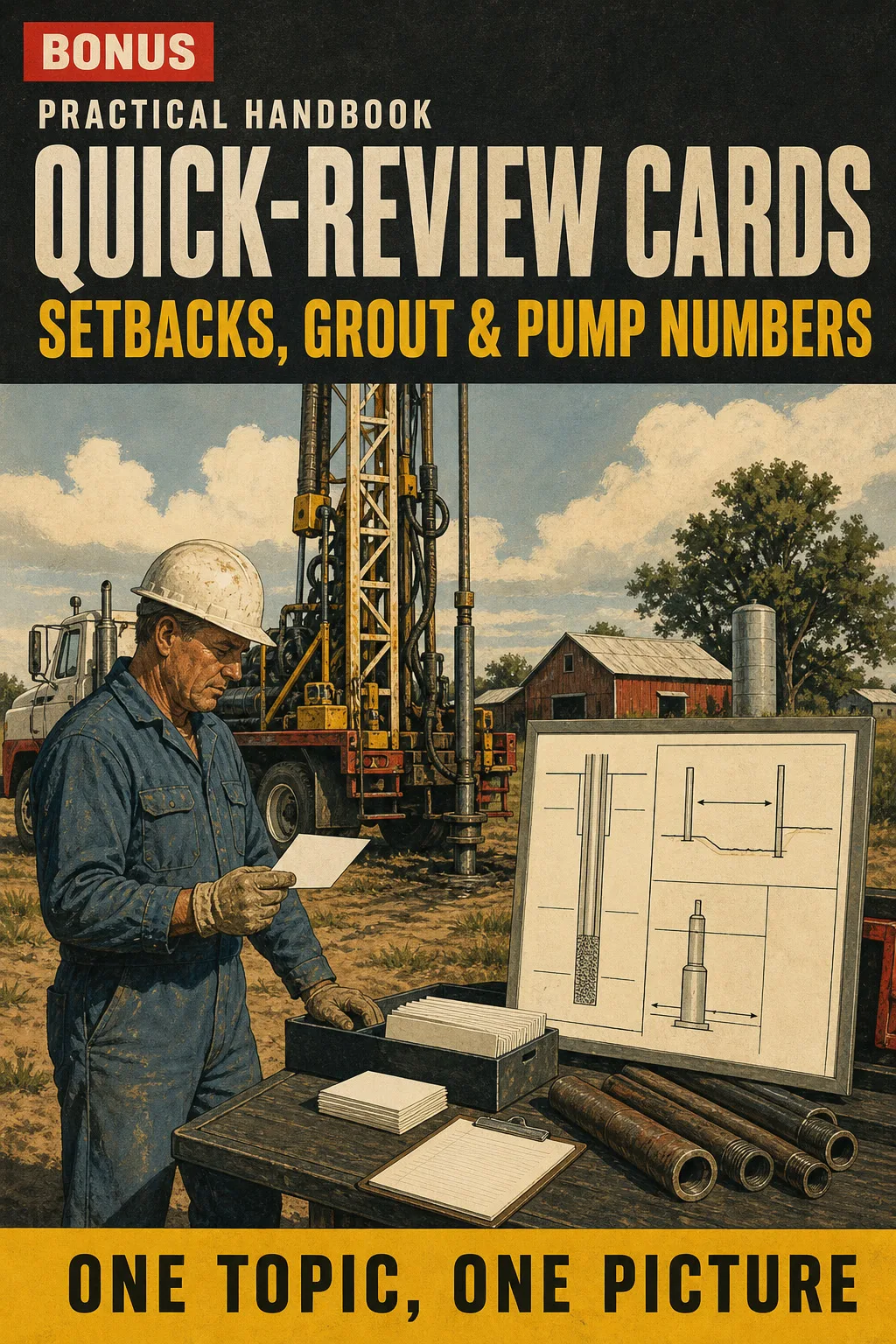
Quick-Review Cards: Setbacks, Grout & Pump Numbers

BONUS 2: «Quick-Review Cards: Setbacks, Grout & Pump Numbers»

Value on its own: US$ 14.90

The numbers you need on printable one-page cards (setbacks, grout depth, tank precharge, chlorine dose) to review at a glance in the truck or the night before the exam.

Water Well Driller Illustrated with 2 Free Books

  • Water Well Driller Illustrated: 74 illustrated pagesUS$ 63
  • BONUS 1: Exam-Style Practice Questions: Driller & Pump InstallerUS$ 17.90
  • BONUS 2: Quick-Review Cards: Setbacks, Grout & Pump NumbersUS$ 14.90
  • High-resolution PDF to printIncluded
Total value US$ 95.80
YOUR PRICE:
US$ 27
You save US$ 68.80
YES, I WANT WATER WELL DRILLER ILLUSTRATED FOR US$ 27

📄 This is a digital PDF book sent to your email: nothing is printed or shipped.

Secure purchaseEncrypted payment30-day guarantee

PDF by email: We email you Water Well Driller Illustrated as a PDF, together with the two free books. It's a single payment: no installments, no extra charges.

Who This Book Is For

You're going for your own license

You're going for your own license

You know the rig after years as a hand. The book puts that work in the order the exam asks for it, one drawn page per topic.

Your exam date is set

Your exam date is set

You review all 9 parts in order, check the flagged values against your state's current code and work the exam-style questions at the end.

You already drill or set pumps

You already drill or set pumps

You keep a printed copy in the truck: pump sizing, tank precharge, grout volume and chlorine dose, each one drawn and easy to find.

Everything You Get Today

US$ 95.80US$ 27
YES, I WANT WATER WELL DRILLER ILLUSTRATED FOR US$ 27

📄 This is a digital PDF book sent to your email: nothing is printed or shipped.

30DAYS
GUARANTEE

30-Day Guarantee

Try Water Well Driller Illustrated for 30 days, bonus books included.

We refund everything if the file won't open, if the book isn't what you see here, if you were charged twice or if the email doesn't arrive. Just email us.

You pay once. No subscriptions.

Frequently Asked Questions

Is it for me if I've been drilling for years and just need the license?

Yes. It doesn't stop to explain what a well is: it goes straight to the topics driller and pump installer exams ask about (construction, grout, setbacks, pumps, tanks, sizing, disinfection), each one drawn, with the number to know and the most common mistake. Every value your state sets is flagged so you can check it against your state's code.

Where does the content come from?

From the national water well construction standard and federal guidance on private wells and disinfection. How a well is built, how pumps and tanks work, pump sizing and the formulas are the same in every state. What changes by state (setback distances, minimum grout depth, casing height, chlorine dose) is flagged on each page with a common value, so you check it against your state's current code and write in your number.

Is this official material?

No. It's an independent illustrated study book. It isn't published or endorsed by any state board, agency or exam provider, and it doesn't give you a license, a certificate or training hours: it's what you study with before your state exam.

Does it replace my training or apprenticeship?

No. It helps you review and understand what you study and do in the field. It doesn't replace the training, field hours or code your state requires.

Are the practice questions the ones on the exam?

No. They're written for this book, in exam style, so you can check what you've got down. They aren't official questions from any exam.

When and how do I get it?

As a PDF by email, at the address you enter at checkout. The 2 bonus books come in the same email.

Do I have to pay every month?

No. It's a one-time payment. No subscription.

Can I have it on paper?

Yes. The PDF is made to print, at home or at a print shop, so you can keep it in the truck.

How does the refund work?

You have 30 days. We refund everything if the file won't open, if the book isn't what you see on this page, if you were charged twice or if the email doesn't arrive: just email us.

Before You Close This Page

No more rereading the code with nothing sticking.

The finished well: you see it drawn, and that's it.

You walk into the exam knowing where everything is.

Drawings make studying faster.

The book is right below.

One-time payment: US$ 27 · Guarantee: 30 days · PDF by email

YES, I WANT WATER WELL DRILLER ILLUSTRATED FOR US$ 27

📄 This is a digital PDF book sent to your email: nothing is printed or shipped.